Sticky Knowledge
text
text
Sticky knowledge is effectively knowledge that will stay with us forever! Our curriculum is carefully planned with clear and coherent learning sequences that progress towards clearly defined end points. Frequent assessments are used in lessons to check that children are learning the key objectives and vocabulary, along with opportunities for children to revisit and refresh what they have been taught after a period of time has passed. This process of retrieval helps to embed learning and, in this way, new knowledge and skills build on what has been taught before, enabling children to remember more’.
What does Sticky Knowledge look like at Little Sutton?
What does Sticky Knowledge look like at Little Sutton?
- Minute-by-minute assessment is used during teaching to quickly identify and address misconceptions.
- End of unit quizzes are used to check pupils understanding of key learning objectives to enable them to learn more and remember more of the curriculum.
- Misconceptions are noted and incorporated into planning for subsequent teaching. Quizzes are also completed during the next unit (that is, at a distance from the original learning). This process of information retrieval after the original teaching helps to embed knowledge in long term memory, ensuring pupils build a secure body of knowledge over time.
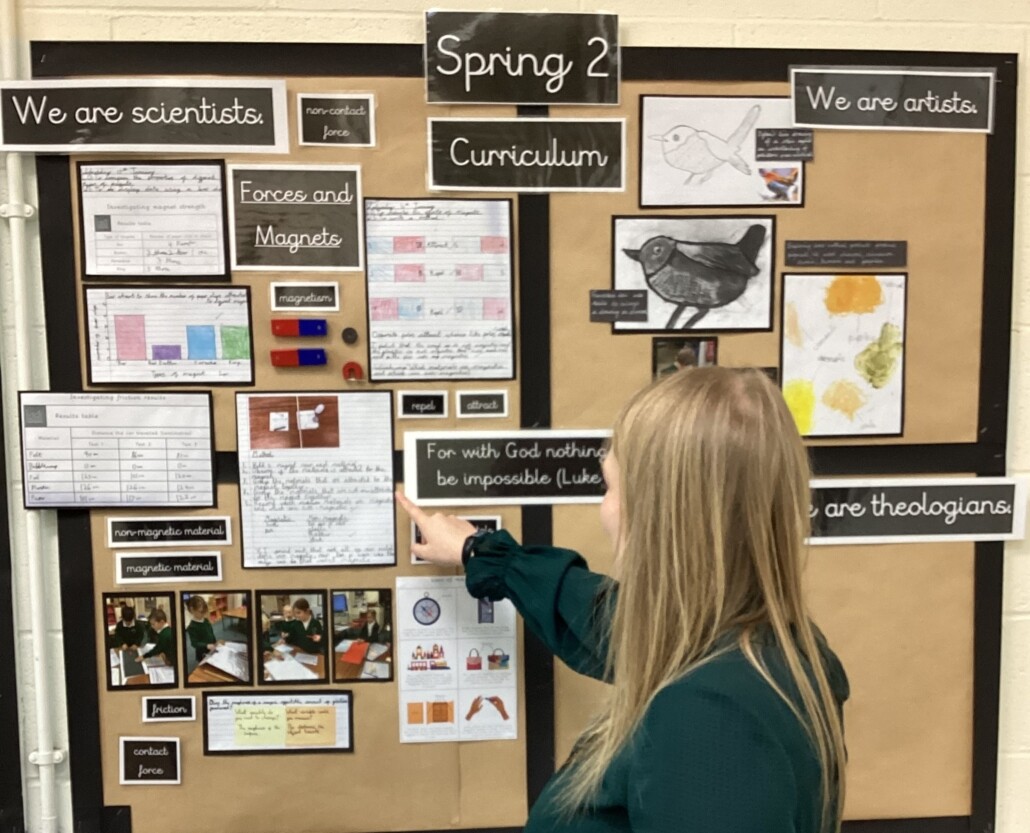
- Curriculum boards in classes are used by teaching staff in a planned and proactive way by as mind maps to help pupils make meaningful connections between different subject areas.
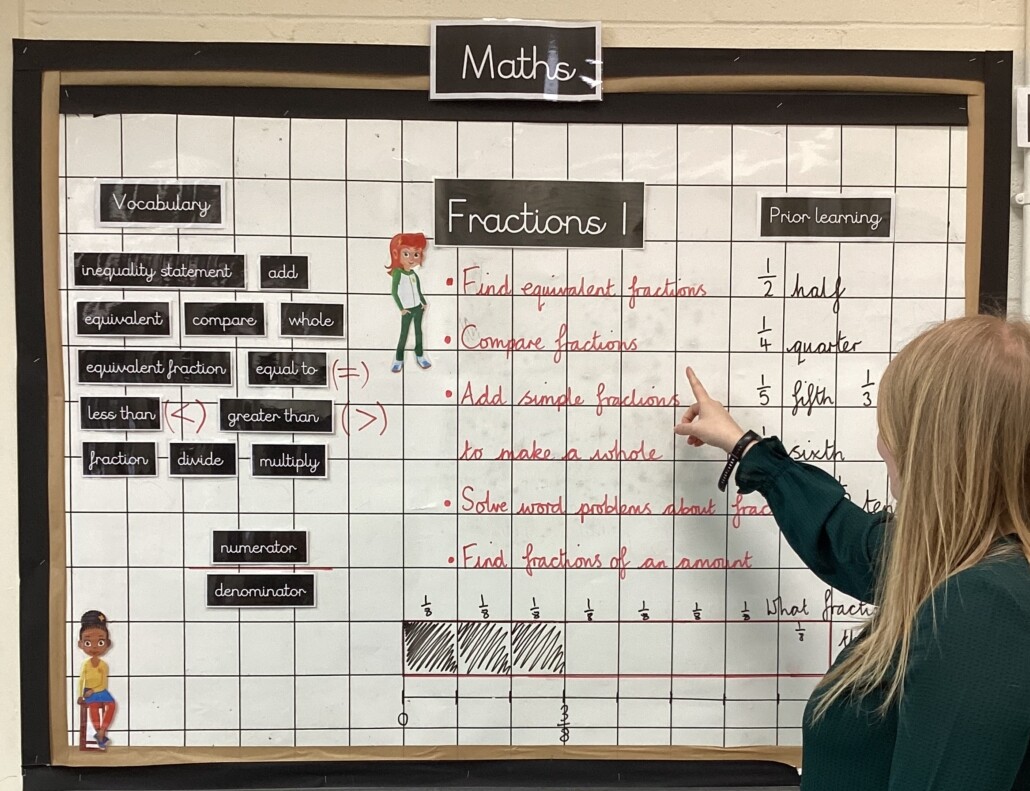
- Working Walls in writing and maths support independent learning within in a unit. Pupils refer to the walls in lessons as a learning aid and as a record of how their skills build as the unit progresses.
- Writing targets for each unit are personalised for pupils and are used to focus learning and build on skills. Pupils use these independently when editing and improving work to ensure they are progressing through their objectives.
- Power Maths unit posters in journals help pupils develop recall and develop their conceptual understanding.
- The EYFS floor book organises and collates children’s thinking focusing on what they find meaningful and interesting. Pupils reflect on prior learning and revisting further development of activities is encouraged when they look through the book. Their comments are used to inform their learning journey.
- REACH and school display boards celebrate pupils’ engagement with all aspects of their learning. These serve as a valuable learning aid to support and motivate learning – pupils enjoy looking at the boards and discussing events, lessons and visitors and how they have enriched their curriculum.